
Economy
Economy
Publication Date
This chapter was published in January 2025.
Executive Summary
An executive summary of this chapter can be accessed and downloaded here:
Economy-JSNA-Executive-Summary-
Contents
- Introduction
- Place Perspective
- People Perspective
- Recommendations for consideration by key organisations across the local system
- Glossary of common terms
- Name and contact details of authors
- References
1. Introduction
The local economy plays a significant role in determining the health and wellbeing of residents. This chapter is designed to provide local stakeholders with a clear articulation and understanding about the ways this manifests itself within Surrey and ensure potential solutions and approaches are well understood.
‘Social determinants are often more important than health care or lifestyle choices in influencing health’ [1], however this is not always fully understood or considered in policy and strategy development or delivery. There are several ways in which the local economy plays a role in determining health and wellbeing outcomes for residents:
- Employment opportunities – whether that is the variety of opportunities, the type/nature of the work, its location, or to what extent the opportunity can satisfy self-fulfilment needs. Both unemployment and lower quality work can cause various health and wellbeing challenges due to aspects such as financial strain, stress, job security, and support at work.
- Developing new skills – access to and ease at which residents are able to develop new skills to improve their opportunities to access employment or progress further in employment.
- Individual finances – which will be impacted by income, costs associated with housing (house prices, interest rates, rental costs), and the costs of services people access.
- Availability and access to local services – this includes health and wellbeing services, but also cultural and leisure assets and overall social infrastructure.
- Connectiveness – between local people, but also a sense of connectedness to communities.
This chapter of the JSNA shines a spotlight on the role that the local economy plays in determining health and wellbeing outcomes – the data underpinning this Chapter can be viewed in the JSNA Economy Dashboard. The Chapter has been structured around two lenses to examine the relationship between the economy and health & wellbeing:
- Place – Prosperous towns and places, with access to a wide range of local services and active local communities, help to improve health and wellbeing outcomes and resilience. Targeting support and partnership working based around towns/places where there is clear evidence of need, will deliver improved health and wellbeing outcomes for local residents. We recognise that the geographical approach to assessing / identifying health and wellbeing needs is an ever-changing environment and, whilst we refer to towns and places geographies throughout the chapter, we acknowledge that this may have developed since publication which will be reflected in future updates.
- People – The role that good quality, meaningful and secure employment plays in sustaining and improving quality health outcomes, and particular groups of residents require more targeted support to better enable them to take advantage of this
Underpinning these two strands, there are numerous ways in which system leaders can collectively respond (via resources, capacity and funding) focused on specific communities and/or priority groups to deliver tailored responses.
Strategic context
The local economy has an important role in reducing health inequalities so no-one is left behind and in supporting improved health and wellbeing (especially with the Priority Populations including the Key Neighbourhoods). The role of the local economy cuts across each of the three Priority Outcomes in the Surrey Health and Wellbeing Strategy [2]:
- Priority 1 – Supporting people to lead healthy lives by preventing physical ill health and promoting physical wellbeing. For example:
- Factors related to meeting the needs of those experiencing multiple disadvantage – including homelessness/risk of homelessness, housing affordability, employment.
- Availability of local services that will support residents to live well and independently, for as long as possible.
- Priority 2 – Supporting people’s mental health and emotional well-being by preventing mental ill health and promoting emotional wellbeing. For example:
- Environments help to tackle loneliness and social isolation which enable residents to increase their ‘sense of belonging’ to their local communities.
- Supporting good mental health in the environments and communities in which people live, work and learn.
- Priority 3 – Supporting people to reach their potential by addressing the wider determinants of health. For example:
- Ensuring residents’ basic needs are met to ensure food security, tackle poverty and provide secure housing.
- Thriving communities that encourages lifelong learning, active participation, and engagement in the community where people feel they have influence.
- Developing skills, training and employment opportunities.
- Access to transport, green and leisure assets that support more active lifestyles.
Surrey’s Health and Wellbeing Strategy also outlines a set of principles for working with communities and identifies several “System Capabilities”, which involve ‘breaking down barriers that might be preventing collaboration across the different parts of the Surrey system’, and ‘will be critical for success and to driving real system change’. Three capabilities that are pertinent to the role the local economy can play in reducing health inequalities are:
- Empowered and thriving communities – Taking a place-based approach (such as Surrey County Council’s Towns Partnership Approach [3]) to create new relationships with communities, co-producing solutions and aspiring to community-led interventions.
- Estate management – Utilising public sector estate assets through a joined-up and targeted approach recognising that the role of the local economy will support greater opportunities to innovate and create economies of scale, which will maximise ways communities are supported. For example, tackling housing affordability challenges, increasing the availability and quality of commercial space, or supporting Surrey’s economic clusters to thrive.
- Workforce recovery and development – For example, health and social care is the largest sector in Surrey and provides a significant benefit to the local economy, but it faces consistent recruitment and skills development challenges. The ambition to develop a single system-wide Surrey health and social care workforce strategy aligns closely with other local initiatives (such as the Surrey Skills Plan [4] and Local Skills Improvement Plan [5]) facilitating greater strategic join-up between partners and supporting residents into employment.
Businesses, in particular, have an important role in supporting positive health outcomes as key employers, through driving positive economic circumstances for people and residents. Local businesses offer people, and specifically residents, access to stable employment, in addition to leveraging skills and supporting local supply chains to provide local opportunities, connect people and grow local resilience. This can often play out through their social value contributions, which relates to the positive effects that businesses can create from activities or interventions.
Social Value is defined through the Public Services (Social Value) Act (2013) which ‘requires all public sector organisations and their suppliers to look beyond the financial cost of a contract to consider how the services they commission and procure can improve the economic, social and environmental wellbeing of an area’. [6] This might include initiatives such as indirect economic benefits (relating to local supply chains and upskilling workers), environmental, supporting the wellbeing of workforces and communities, and improvement of social / community amenities. Businesses, charities, and community groups across Surrey are already working together and sharing resources to improve health and social outcomes [7], including Surrey County Council’s Careers Hub connecting with local organisations to raise awareness of local job opportunities, career pathways, and skills gaps. Other examples include two Surrey businesses, Ringway and Atkins, delivering educational activities such as experiences of the workplace and skills events. An example of employee volunteering saw Pick Everard employees participate in a volunteering day with Surrey Choices, supporting ground clearance in the community.
An organisational coordinated focus on social value, influencing environmental, wellbeing, and financial factors, can significantly impact the positive economic and health outcomes for the local economy. As discussed later in the chapter, anchor institutions play a significant role in Social Value and the health and wellbeing of local communities – by strategically managing their resources and operations, anchor institutions are recognised as offering stability, essential services, and generate employment which positively links to the wellbeing of the populations that they serve.
Surrey’s economy, people, and place
The figures and data used in this chapter represent a “snapshot” of what is available. Refer to Surrey-I and JSNA Economy dashboards for the latest information.
Overview
Surrey is an area of many economic strengths and one of the largest contributors to the UK economy after London. The county is exceptionally well connected both globally, as a result of the proximity of Heathrow and Gatwick Airports, as well as to London and the South East coastal ports. However, this does mean that Surrey experiences serious and persistent road and rail congestion, with data showing that the average travel time to reach employment is at 92 minutes, 10 minutes higher than the UK average.
The county’s economic success is delivered within a uniquely green environment, with 70% of the county’s 1,666km2 land area being Green Belt and 45,000 hectares designated as an Area of Outstanding Natural Beauty or other special landscape designation. Despite the slowing of the annual growth of house prices nationally, Surrey’s housing affordability remains a challenge although it has improved slightly. Affordability is calculated by dividing the median house price by gross annual household income for each local area, with a lower ratio indicating better affordability. Surrey’s housing affordability decreased slightly from 12.56 in 2021 to 11.9 in 2023 (with median gross annual residence-based earnings in Surrey at £42,882 and median house price at £510,000). The ratio of house prices to income in Surrey in 2023 was above the South East value of 10.2 and significantly higher than the England value of 8.2. Outside of London, no county in England had a higher value than Surrey. Within Surrey, housing affordability ratios for lower tier local authorities ranged from 14.7 in Mole Valley to 10.3 in Surrey Heath. The health implications around housing are explored later in this chapter.
The JSNA chapter on Housing and Related Support has more details on housing supply in Surrey, including privately rented and social housing.
Business base and key sectors
There is a large and active business base, with 110,000 businesses in the county (91% micro enterprises). Surrey’s economy produces Gross Value Added (GVA) of over £50bn and is home to innovation strengths in clusters of businesses driving forward developments in the pharmaceutical, health, space, gaming, and green automotive industries. This is evidenced through the range of technology research centres that the county hosts including the 5G Innovation Centre at the University of Surrey, the McLaren Technology Centre in Woking, Story Futures at Royal Holloway University, and the Pirbright Institute in Guildford.
Moreover, Surrey is home to many large, multinational companies including Pfizer, Haleon, BP, Gordon Murray Automotive, and Samsung, and has a high proportion of businesses in knowledge-based industries creating a strong and high-performing innovation ecosystem.
Economic growth
This thriving growing economy brings great benefits, from high-value jobs for local people, to tax income, supply chain services, and investment on economic infrastructure. However, this picture of economic success should be balanced within the overall regional economic forecast. The South East’s economy has a GVA that recovered to 96.9% of its 2019 size by the end of 2021 but is still below the national average of 97%. 2022 regional GVA chained volume measures shows growth in the South East (being over 3.5% higher than the 2019 figure) which is also above the growth for the whole of England (2.3%). Despite this more recent regional growth, there is still a risk of reduced growth in the years to come with the likely shift of economic activity and investment away from the South East to other parts of the country.
In 2021, only 3.2% of Surrey’s active enterprises (with 10+ employees) were high growth, a decline from previous years’ figures of 4.1%. The 2022 figures show signs of improvement with Surrey’s share of high growth businesses increasing to 4.1%, around 230 businesses, however, high growth business levels are yet to return to pre-pandemic levels of 5%.
Labour market
Surrey has a very highly skilled population with 42.4% qualified to Level 4 or above (the national average is 33.9%). Level 4 qualifications and above are Higher National Certificate, Higher National Diploma, Bachelor’s degree, or post-graduate qualifications.
We continued to see an increase in the number of jobs held by employees in knowledge intensive industries, raising to 134,000 jobs in 2022. Out of the 646,900 economically active residents in 2023, 82.4% were in employment, with the majority of those (67.2%) working within Professional Occupations or as Managers, Directors, and Senior Officials.
Surrey’s high economic activity rate and low unemployment creates a tight labour market that puts additional pressure on businesses trying to recruit skills talent. This is exacerbated by high house prices along with public transport challenges across county and quick transport links into London, which have negative impacts on local employers’ ability to recruit essential workers within the county. Typically, NHS and social care roles are hard to fill, as well as jobs requiring higher skills levels, for example in the automotive and technology sectors. Unaffordability in a local area forces workers to move away to more affordable locations impacting employers’ ability to attract workers, particularly in public sector employment such as education and health roles. The challenges around house costs also means a rise in sub-standard living quality with issues such as damp and overcrowding negatively impacting residents’ health. National house price to earnings ratio peaked in Q2 2022, with the average house price now at nearly 7 times the average income. [8]
Inequality and ‘No One Left Behind’
Surrey’s overall success story masks some disparities within the county. West Surrey’s economy is disproportionately more productive than East Surrey’s, explained largely by the different business base in the west and the innovation and knowledge-intensive industry connections to the University of Surrey and Royal Holloway University. There are still clear discrepancies between full-time average weekly wages across different districts and boroughs, with Guildford’s average in 2022 significantly higher at £736.70 compared to £510.90 in Epsom and Ewell. There are slight signs of improvement with Elmbridge’s average in 2023 at £895.60 compared to £718.10 in Tandridge, however, the disparities between areas remains.
While many Surrey residents benefit from relative affluence and wealth, there are significant numbers of people in small neighbourhoods, often not captured by data sets, who struggle with poverty, poor physical and mental health, worklessness, alcohol and substance abuse, and domestic abuse. Their experience of these conditions is heightened by being surrounded by the everyday signs and signals of the general prosperity and quality of life others enjoy. For example, we know that Surrey has four Local Super Output Areas (LSOAs) that fall into the 10-20% decile in the Index of Multiple Deprivation (IMD, 2019). The wards that encompass these LSOAs are Hooley, Merstham and Netherne ward in Reigate and Banstead, Canalside ward in Woking, and Westborough and Bellfields and Slyfield wards in Guildford. These four wards are included in the 21 Key Neighbourhoods in the Surrey Health and Well-being Strategy.
Approximately 30,000 people are living in these most deprived wards, with further pockets of deprivation in the highest 10% on the IMD affecting the income of households with children, and education and skills in other Key Neighbourhoods across Elmbridge and Surrey Heath. 2022/23 data shows that over 19,000 children in Surrey are living in absolute low income households before housing costs (previously described as ‘children in poverty’), which is linked to poor health and wellbeing outcomes for them and their parents. Between February 2023 and February 2024, the number of households on Universal Credit with children has increased by 9.7% to 26,191 households. [9] The number of households has more than doubled since February 2020 when the figure was 10,053. Figures have continued to rise since then.

Many of these factors lead to reduced health and wellbeing outcomes. An estimated 10,600 5 to 15-year-olds have a mental health disorder and, in some areas, adjacent wards have a gap in life expectancy of up to 10 years with a gap of up to 12 years for females between the wards with the highest and lowest life expectancies.
It is key for socio-economic status to be a key consideration in Equality Impact Assessments across the Surrey system, with the Surrey Health and Well-being Board and Surrey County Council having signed the Good Company’s End Poverty Pledge and encouraging other organisations to action similar initiatives to support these challenges. It is important that local partners and stakeholders recognise these challenges and the immediate need to protect Surrey’s economic success with a sustainable and inclusive vision of long-term inclusive economic success for the county, which will help to tackle the wider determinants of health and wellbeing.
2. Place Perspective
Place Perspective Hypotheses
Prosperous towns and places, with access to a wide range of local services and active local communities, help to improve health and wellbeing outcomes and resilience.
Despite the general perception of Surrey as being comfortable and prosperous, a number of communities and places experience significant challenges – there are ‘pockets’ of deprivation in key neighbourhoods across the county and several of our strategic town centres perform below the Surrey average on the combined index for retail environment, health services, physical environment and air quality. The role that “place” plays is an important factor in helping to tackle the wider determinants of health. Partners across the county have developed a range of strategic plans to help address some of these challenges, however the complex nature of many of the ‘wicked issues’ requires a multi-agency, highly collaborative approach.
Successful towns and cities have always been at the heart of economic development and the creation of prosperity, whether as marketplaces or as centres of enterprise, knowledge, culture, learning and innovation. Research demonstrates that city and town leaders have significant influence over the social determinants of health, with decisions around planning, the built environment, economic development, transport and housing having a direct and indirect impact on the health of residents. [10] More information is available in the Surrey JSNA on Housing and Related Support. Improving a population’s health is dependent on coordinated action at multiple levels with effective leadership, governance and investment.
Based on experience and engagement activity across towns and places in Surrey, and taking learning from place-based approaches elsewhere, the 27 strategic towns and key neighbourhoods across the county are the optimum spatial level to help drive practical delivery, beyond strategic intent. The strategic towns in Surrey were identified through a methodology of locating town centre points (high street or main retail street using the Ordinance Survey high streets dataset) and creating 25 minute walking catchments that can be used as a proxy for the town footprint. These areas were then mapped against any LSOAs that intersect with any part of the walking catchment – those that most realistically represent the town area were then identified using local knowledge to provide a best fit definition of the towns, often made up of several LSOAs. In some instances, the walking catchments for 2 towns overlap, resulting in LSOAs being included in the strategic town definition for multiple towns – this reflects the fact that a resident, business or asset that falls into the catchment for both towns will be relevant to the socio-economic setting for both. The map below indicates the strategic towns that were identified.
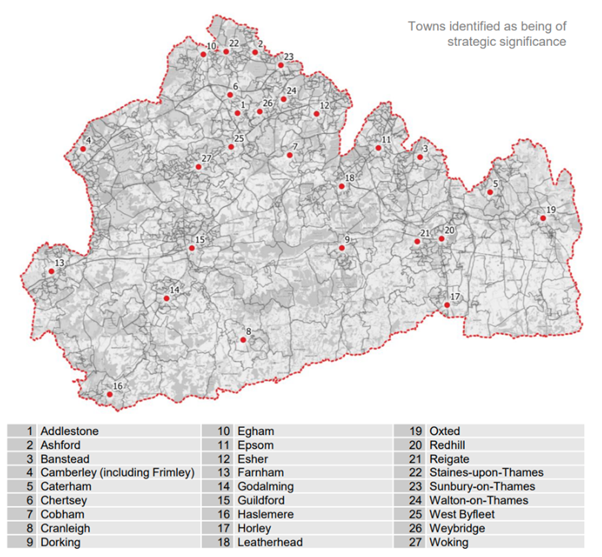
Figure 1 – map of Surrey identifying the 27 strategic towns
This engagement and strategic planning method requires a towns / place-based approach from which to convene, galvanise and empower local partners to work together to deliver. Targeting support and partnership working based on places where there is a combination of evidence of need and opportunity (i.e. appetite for change), will deliver accelerated improvements to the health and wellbeing of those residents, when compared to interventions in more prosperous places in Surrey. It is acknowledged that although the development of the towns work in Surrey has progressed since this initial exercise (including the extension of the work to villages in Surrey), the core principles and approaches remain the same.
At a local level, there is a rich knowledge and understanding about a place, in which individuals are personally invested in wanting to see improvements in their local area. However, capacity and limited join-up with strategic partners working to different boundaries and organisational priorities, often means change happens in pockets and lacks coherence. To help more effectively drive change and improve local places requires local multi-faceted stakeholder groups to come together and combine the efforts of both local actors and strategic partner organisations.
The Community Life Survey 2021/22 (a nationally representative annual survey of those aged 16+) highlights that those living in the least deprived areas of the country showed higher engagement (37%) in civic participation than those in the most deprived areas (27%). Only 27% of respondents either definitely or tended to agree that they personally can influence decisions affecting their local area. When asked what would make it easier to influence decisions in their local area, respondents most commonly replied with ‘if I knew what issues were being considered’ [11] Strategic partners are key influencers in ensuring local residents are invested and aware of the improvements in their local area, with more effective partnerships with local groups and stakeholders necessary to drive this change, help increase local active citizenship, and enable solutions for economic prosperity.
This approach will also help to achieve more with the limited resources and funding to which each individual organisation has access. Different responses can be shaped based on the context of each local area, which includes considering how different services are delivered within a place, the local assets available, and opportunities to align and join initiatives up. It is, however, worth noting that the reality of driving these types of systemic changes is often challenging and requires strong local collaboration which is not always focused on the immediate here and now, but the medium- and long-term outcomes.
What do we know?
There is diversity at a local level in Surrey’s concentrations of economic activity, considering its polycentric distribution, with local economic activity taking place primarily within the strategic town centres and their immediate vicinity. The Lower Super Output Areas (LSOAs) that define the strategic towns are home to over 54% of Surrey’s total resident population and are key centres of socio-economic activity, concentrating retail, leisure, education, public services, and many of Surrey’s largest employers.
Socio-economic indicators considered within a town context reflect the strengths and weaknesses of an area, with the insights directing the need for place-based interventions. Although Surrey has a strong Gross Domestic Product (GDP) performance, recorded at £56,625 million in 2022 at current market prices, GDP is a specialised tool for measuring the size and health of a country’s economy through market activity and is not reflective of the wellbeing of an area and its residents [12]. The wellbeing of Surrey’s population is impacted by social and environmental factors such as political participation, quality of both healthcare and education, security, inequality and accessibility of green spaces. Numerous socio-economic measures crucial to wellbeing are not included within the GDP measurement, such as:
- Unpaid household service work – values unpaid production activity including childcare, cleaning, and preparing meals which is an important aspect of people’s lives and is largely missing from regular economic statistics (2016 estimated value for the UK was £1.24 trillion)
- Volunteer activity taking place in communities
- Transport services such as driving yourself and others to work
- Loss or gain of social capital and political participation.
The ability to measure such socio-economic factors provides a more comprehensive picture of the activities that affect residents’ wellbeing, as time spent on these activities can impact stress levels and wellbeing across the population [13].There have been various attempts to measure economic performance and social progress through indicators such as Genuine Progress Indicator (GPI) or Better Live Indicator (BLI) of the Human Development Index (HDI), all of which include wellbeing dimensions for consideration across key places of economic activity ranging from income and jobs to work/life balance, environmental quality, education, social connections, and civic engagement. These indicators, however, are not measured at a smaller geography (i.e., LSOA level), demonstrating the need for local insight and partnership.

Asset-based Community Development
The complex and multi-faceted nature of the challenges faced by communities in the county, require a collaborative multi-agency approach.
Cormac Russell’s study into asset-based community development focuses on the benefits of connected communities in terms of leveraging resources, skills and experience in local neighbourhoods to create safer, greener and healthier communities. [14] There is strong evidence demonstrating that meaningful social connections are important to our wellbeing, with Russell’s research noting the Brigham study which looked at more than three million participants and found that increased social connection is linked to a 50% reduced risk of premature death. The Surrey Health and Well-being Strategy recognises the importance of these approaches in its Principles for Working with Communities.
Focusing on a place-based approach and local participation can facilitate breaking down the barriers of social isolation and increasing community participation. It also involves coordinating limited resources to ensure overall coherence across services that puts residents at the centre of the decision-making process. A focus on local growth allows residents to influence how their area looks and functions, supporting communities to lead the change that affects them most.
Taking collective action builds a greater sense of confidence, trust, and belonging whilst greater community power can help to tackle local issues and challenges. National research highlights that many residents are not currently involved with civic engagement or social action in their local area. The Community Life Survey 2021/22 results show that 34% of respondents said they had engaged in some form of civic participation (engagement in democratic processes) in the last 12 months. [15] This is a significant decrease in the 41% reported participation rates in 2020/21 (although there should be due consideration of the potential for these figures to have been inflated due to Covid). A common barrier to people engaging with decisions in their local area is a lack of understanding about the issues being dealt with or how residents are able to get involved. The same national survey reported that 53% of respondents felt it was important for them personally to be able to influence local decisions. The Surrey Health and Wellbeing Strategy Index shows that an average of 37.8% of residents in Surrey participate in volunteering. [16] Action needs to be taken to more actively involve residents with local decision-making processes and participating in their local communities by promoting mechanisms for engagement and raising awareness of local issues. Conducting this action at a localised level helps to focus on need that is specific to each town, as Surrey’s polycentric distributions allows for diverse towns and villages which each have their own distinct assets and opportunities.
Local Assets – Anchor Institutions
When operating in this flexible manner and adapting to local context, determining key local assets and strengths is the first step. Capital, human, and infrastructure assets all play an important role, however, organisational assets, such as local anchor institutions, are also vital.
Anchor institutions are recognised as important organisations whose long-term sustainability is linked to the wellbeing of the populations that they serve. By strategically managing their resources and operations, anchor institutions can help address local social, economic and environmental priorities in order to reduce health inequalities and grow the local economies. [17] Their ability to leverage employment, skills, local goods, and services can be anchors for opportunity, connecting people, and growing local resilience – examples of potential anchor institutions include councils, the NHS, universities, and libraries. By taking concerted positive action, anchor institutions are able to play an important role in improving community conditions through various areas of investment such as workforce training, creating affordable housing, environmental action (such as recycling and transport), localised economic activity through hiring and purchasing, and focusing on community needs to improve population health.
This recognition ties in with the 4th purpose of the Integrated Care System (ICS) which looks to help the NHS to support broader social and economic development by understanding the links between the NHS and the local economy, therefore creating a more productive system. A knowledge of the social and economic landscape in which the NHS operates is essential to understanding population health and prevention. [18] Anchor institutions and systems ensure organisations look beyond to the wider landscape to recognise how they can support, address, and influence the improvements and changes needed to add value to the local area.
Surrey’s Strategic Towns
The key place indicators for the 27 strategic towns, many of which encompass Key Neighbourhoods, highlight where priorities for strategic towns can be focused, with the need to respond to current challenges such as distance to key services, housing affordability, accessibility of green space and civic participation. In terms of the proportion of children (aged 0-19) in relatively low income families in 2022/23, Surrey performs better than the national average of 19.7%, with a county average of 8.4%. However, there are certain strategic towns within the county which show a high proportion of children living in relatively low income families such as Horley (13.0%), Chertsey (12.3%) and Addlestone (11.5%), and 29.8% in the Key Neighbourhood of Canalside (Woking).
The place indicators also analyse data that have a clear impact on physical health, such as accessibility of green space, which is conducive to physical activity. The Access to Health Assets and Hazards (AHAH) Physical Environment score measures accessibility in terms of the amount of blue space and green space, with a higher score indicating poorer health-related environment. The county average score in 2022/23 is -0.37 with many towns in Surrey scoring above this e.g. Banstead (0.6), Caterham (0.8) and Epsom (0.2). Another key indicator is the Index of Access to Health Assets and Hazards, in which a higher score indicates that an area has a poorer health-related environment – individual values for Surrey towns range from 11.9 in Cranleigh to 25.9 in Caterham. A number of towns have much higher values than the Surrey average of 17.9 including Caterham (25.9), Banstead (24.9), Ashford (23.8), and Addlestone (23.1). It is evident that whilst many of these place indicators focus on improvements to the local area, these also have a proven positive impact on individual health and wellbeing. Civic participation, for instance, which includes voting and volunteering, is associated with better psychological, physical, and behavioural health and wellbeing. [19] Surrey data demonstrates that there remains room for improvement in this area. In 2022, voter turnout at local elections was 50.7% with some areas of Surrey having considerably lower figures such as Chertsey (38.5%) and Egham (40.0%).
A targeted response to these local challenges will provide town centres with the opportunity to become community life centres that contribute positively to local growth, enabling a resilient community-led town centre regeneration which will secure economic prosperity, improved quality of life, and empowered communities.
Case study: The Towns Approach in Horley
Horley, a town in the borough of Reigate and Banstead, needed support after the Covid-19 pandemic which had led to high levels of unemployment and other related issues. Local authorities and stakeholders in the area were already looking to create a strong, safe and welcoming town centre through various initiatives, such as the Borough Council’s Delivering Change in Horley Town Centre programme and the Town Council’s and Horley Town Management Group’s ‘2015 Horley local vision’.
The catalyst for the towns approach in Horley came when Surrey County Council (SCC) convened partners to work on an application for the government’s Community Renewal Fund (CRF). The application was ultimately unsuccessful due to high national competition, however, local partners committed to the system-change approach, putting local communities at the heart of the decision-making for the area. SCC contributed staff time and revenue budget to cover the costs of local engagement, the commissioning of an independent convenor, and the budget for an independent evaluator to ensure learnings were taken from the work to inform a scalable approach.
Over a 12-month period there was extensive local engagement to identify key assets, local aspirations and community commitment to drive local change through asset-based work. The engagement revealed some gaps in under-represented sections of the community, namely those living in new neighbourhoods and under-18s. Targeted door-to-door campaigns were arranged, and the delivery of workshops and assemblies to engage local secondary school students, YMCA young people groups, and neuro-diverse local residents through County Care. This active citizenship model enabled the participation of over 600 young people in the decision-making process, along with public workshops and events in local venues to build the vision for the area.
A community-led vision and set of 13 local priorities were developed including, focusing on more activities for young residents to do in town, improved public realm and access to green spaces, the community to work more cohesively together, and parks to offer better provision – with the priorities to be governed by a mix-model of local leadership. A ‘local crew’ was formed to steer the work which comprised two local residents, two high street retailers, the two largest employers in the town centre, two Council officers, Growing Health Together, the local YMCA, Oakwood Secondary School, the local theatre, the local leisure centre, and Gatwick Airport. Officers across SCC and RBBC have been involved in regular strategic conversations, through a ‘Sponsor Group’ overseeing the initiative.
As a result of the partnership work, over £6m of investment has now been secured, which will be used to deliver enhanced public realm initiatives, wayfinding, ‘greening’ the town centre, improving local play provision and community facilities. The partnership harnessed collaborative efforts between local stakeholders who are now unified by one single vision and a set of priorities to drive the collective work.
A set of town engagement principles have been developed following the work in Horley, which can be used to shape future town-based approaches. These include:
- Gain in-depth understanding of the town and stakeholders, including work to date.
- Make clear link with the plan for the integrated neighbourhood health & care teams.
- Convene and lead multi-agency town ‘crews’.
- Town crews should collate insights and intelligence and work with the community and wider stakeholders to establish key priorities for the town. They should also connect, align and co-ordinate others as required to deliver outcomes for the town – spotting opportunities for prototyping and new initiatives.
- Local Councillors should be kept engaged informally as they have an important role in linking town co-ordinators to local stakeholders, can help to inform priorities, advocate for the partnership model and support progress.
- Identify who will play which ongoing roles after the initial set up phase (with the set-up phase “sponsors” and “coordinators” changing/ moving on).
Key Neighbourhoods and Priority Populations
Whilst the above data focuses on Surrey’s strategic towns, Surrey also aims to deliver improved health and wellbeing outcomes within the Surrey Health and Well-being Strategy priority populations, recognised as communities of identity (e.g. carers) most at risk of experiencing poor health outcomes, and key neighbourhoods, which are wards that encompass key LSOA areas likely to have the poorest outcomes based on the Index of Multiple Deprivation (IMD). Whilst place data can provide insight into local priorities and targeted areas of need in terms of Surrey towns, it is key to consider the priority populations and key neighbourhoods when implementing interventions and resource to ensure that those most at need are supported to secure economic prosperity and improved quality of life.
What is this telling us?
- The data shows several strategic areas across Surrey are performing below the Surrey averages across some of the key wellbeing indicators – prioritisation based on need within certain places should drive our collective efforts. It is recognised that, whilst this analysis focuses on a place-based assessment of need, there should also be consideration of specific communities of identity that are most at risk of experiencing poor health outcomes within that place.
- Whilst an evidence-led approach is vital to address work in areas with the highest level of need, a community-led approach requires multi-stakeholder effort and coordination of local assets to succeed – to do this effectively, willingness and collaboration with local partners is key. There is a need for a multi-faceted and coordinated local partnership effort, to enable and facilitate sustainable growth in our towns.
- In order to enable resilient community-led town centre regeneration, securing economic prosperity, improved quality of life indicators and health outcomes, and empowered communities, it will be vital to put residents at the centre of the decision-making process. National research emphasises that residents, particularly those within vulnerable groups, should be supported to take a lead in supporting their future and that, by engaging these groups, services and improvements that could be most beneficial to these residents will be developed [20] The medium- and long-term outcomes will emerge from prioritised local initiatives that look to improve quality of life indicators and can help across all wellbeing dimensions, including health status, environmental quality, and benefits from natural assets.
Best practice examples
Desk-based research has found best practice examples which highlight the effectiveness and benefits of asset-based or community led initiatives. The following summaries identify areas that have successfully implemented this approach.
| Example | Description | Link |
| The Wigan Deal | ‘Asset-based’ working, underpinned by bold leadership and a long-term strategic commitment to working differently with local people and communities has achieved challenging the engrained ways of working to realise substantial savings while protecting / improving outcomes. | A citizen-led approach to health and care: Lessons from the Wigan Deal | The King’s Fund (kingsfund.org.uk) |
| Scotland’s Improvement Districts | Delivering change and boosting businesses in communities across the country by giving people the means by which to unlock the unique potential of every place. The goal is to support each individual organisation in its mission to drive inclusive local economic growth by providing national strategic guidance, delivering training and practical support while building strong national partnerships. | Scotland’s Improvement Districts |
| Porto Alegre, Brazil – Participatory Budgeting Programme | Successful participatory budgeting with 17,200 citizens involved at its peak (2002) and distributing around $160m of public money. The process was designed to challenge the corruption and clientelism endemic in Brazilian political culture at the time. It was particularly effective at mobilising those who are often marginalised, having powerful redistributive impacts, as well as becoming embedded in the institutional structure of municipal government. | Case study: Porto Alegre, Brazil | Local Government Association |
| Tower Hamlets, ‘You Decide!’ | The area was split into eight Local Area Partnership (LAP) areas – a You Decide! event was held in each LAP, and LAP Steering Groups (made up of residents, councillors, and service providers) helped to monitor and shape the services which would be delivered in their local area. Overall, 815 people were involved and a majority of participants said they had developed skills linked to empowerment, and the community overall felt they could better influence their local environment and services. | Tower Hamlets, ‘You Decide!’ | Local Government Association |
| Preston Community Wealth Building | Creating a resilient and inclusive economy for the benefit of the local area, providing value for local communities wherever possible. The key areas of work include progressive procurement, social value, democratising the economy, and Preston real living wage (paying all employees a fair and reasonable wage). To achieve the most value and benefit for the local area, Preston works closely and collaborates with anchor institutions and local partners wherever possible. | What is Community Wealth Building? – Preston City Council |
3. People Perspective
People Perspective Hypotheses
Good quality, meaningful and secure employment plays a significant role in sustaining and improving quality health outcomes, and particular groups of residents require targeted interventions and support to better enable them to take advantage of this.
The impact employment and skills development have on an individual’s health and wellbeing goes beyond simply having a job and is also about the quality of that work, such as the variety of opportunities, nature of that work, and location (e.g. commuting time). How these impact health and wellbeing is highly individualised as everyone has different preferences and place different values on various elements of their work and life.
Employability provision as currently configured, covers a wide range of unconnected delivery and funding models, which creates a high level of complexity and incoherence. Whole-system engagement is required to make long-term sustainable differences to the employment outcomes of the most disadvantaged groups in Surrey. Anchor institutions have a particularly important role to play and can make a significant positive impact when taking action to support the coordination of efforts and delivering programmes of support.
A further complication to delivering a local response, is the multi-faceted barriers that prevent people from entering employment. Therefore, highly targeted and joined-up interventions aimed at specific groups or communities based on evidence where employment and educational outcomes are the lowest, will ensure provision is more suitable and help to make the most substantial improvements to health and wellbeing outcomes. This is particularly important, as the multiple disadvantages that many residents face mean that it is likely more holistic interventions are required, which will involve multiple local and strategic partners, and take a longer time to deliver sustained and positive outcomes. The JSNA Chapter on Multiple Disadvantage in Surrey explores some of these issues in more depth. Any new interventions that are developed need to minimise duplication and help to maximise the existing support and resources available.
What do we know?
Research by The Health Foundation highlights that social, economic, commercial and environmental conditions are the strongest determinants of people’s health, with good quality employment playing a key role in a positive impact on a range of health outcomes. Data shows that higher employment rate is strongly correlated with higher healthy life expectancy, particularly for men – in England on average, for every 10% higher the employment rate, healthy life expectancy is around 5 years higher. Unemployment can cause various challenges including poverty, financial strain, unhealthy behaviours, stress, and implications for future employment, all of which can have a negative impact on mental and physical health. However, it is not just about access to work – the ’quality’ of that work is also a vital factor which can affect an individual’s health and wellbeing with aspects such as job and pay security, contract type, support at work, and work-life balance playing a role in quality of employment and health outcomes.
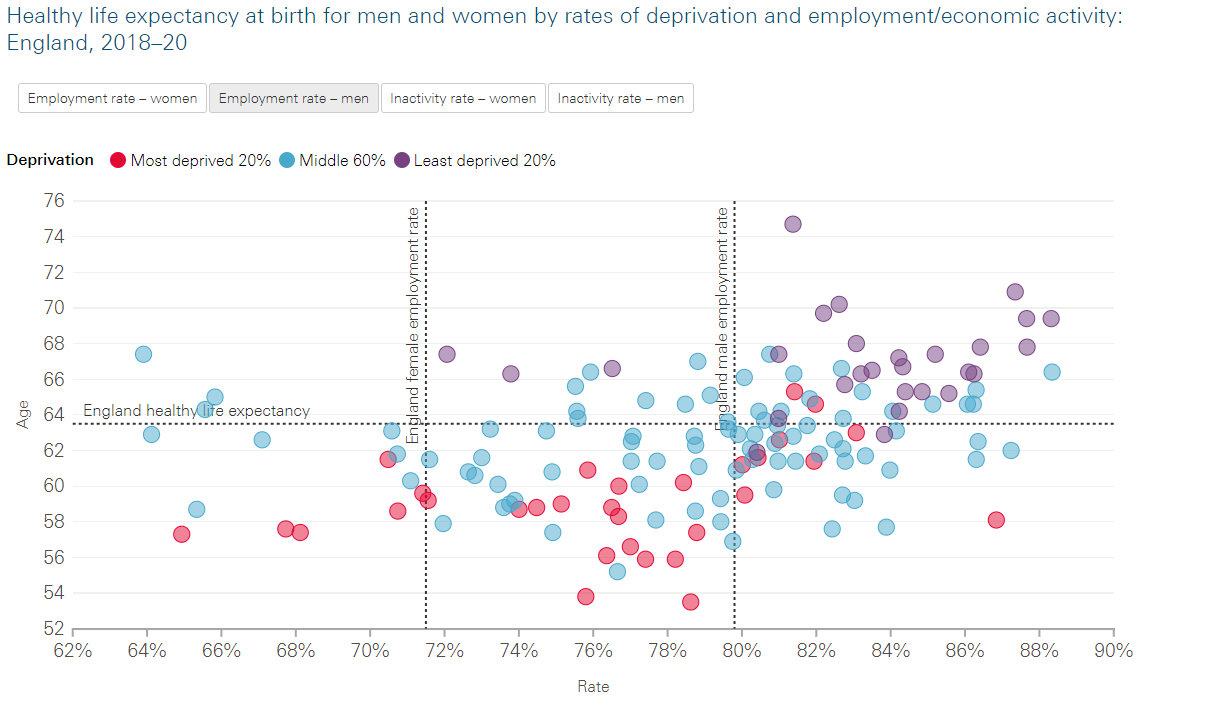
Figure 2 – healthy life expectancy at birth by decile of deprivation and employment rate for males in England
Surrey specific insights into healthy life expectancy and inequality in life expectancy by deprivation can be found on the Health and Wellbeing Strategy Index, with 2018-20 figures showing that the inequality for life expectancy at birth (calculated from the deprivation deciles of LSOAs within Surrey) is 6.2 years for males and 5.4 years for females. [21] This is a steady continuous increase in inequality from 2016-2018 figures of 5.8 years for males and 4.7 years for females. Child poverty and disadvantage in Surrey research also demonstrates that child poverty exists in both working and non-working households. As of 2022/23, almost 7 in every 10 children (13,508) who live in absolute low income households in Surrey have at least 1 adult in the household who is in employment. [22]
There is clear evidence of a correlation between Key Neighbourhoods in Surrey and employment deprivation – this is part of the IMD 2019 which specifically measures the proportion of the working-age population in an area involuntarily excluded from the labour market. This includes people who would like to work but are unable to do so due to unemployment, sickness or disability, or caring responsibilities. [23] The following map indicates these areas of Employment Deprivation of IMD 2019 in Surrey, showing correlation with the Key Neighbourhoods (outlined in bold).
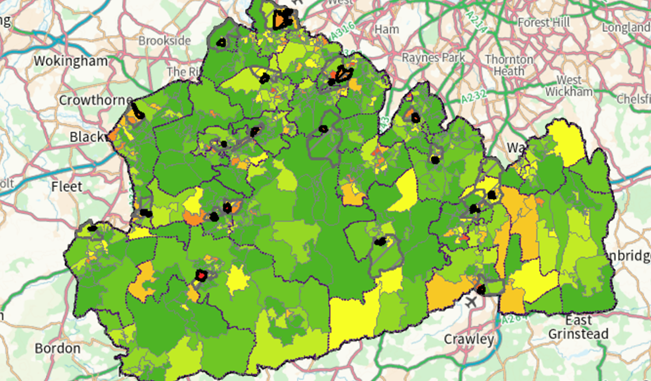
Figure 3 – map of the areas of Employment Deprivation of IMD in 2019 in Surrey
The CIPD Good Work Index conducts research regarding the work and employment relationship and impact on lives, and assesses these outcomes through seven dimensions of good work. These measures are a combination of subjective and objective, including pay and benefits, contracts, work-life balance, job design and the nature of work, relationships at work, employee voice, and health and wellbeing. Key outcomes from their 2020 survey (just before the Covid-19 pandemic) highlight that pay and contractual working arrangements are fundamental to good work, with temporary and variable hours contracts generating huge anxiety and economic hardship for workers due to not having enough paid work or having unpredictable working hours. [24] The outcomes were also significant with regard to job security, which is measured by the respondent’s evaluation of how likely they feel it is they will lose their job in the next 12 months. Around one in eight workers feel it is likely or very likely they will lose their job in the next 12 months, with this fear being harmful to wellbeing and the job loss itself even more damaging. Research quoted in this survey demonstrates that unemployment can have long-lasting effects on wellbeing that can only be erased with eventual re-employment.
Economic Inactivity
A County Councils Network (CCN) 2023 analysis report looking into the economic inactivity trends in counties reveals the post-pandemic changes to the UK labour market and specifically the growing challenge of economic inactivity (those not actively looking for employment in the labour market). [25]
Within the report, an analysis of the numbers of economically inactive people as of September 2022, compared to March 2020, reveals that there has been an 11.6% (320,300) increase in the number of economically inactive people in England’s 37 county and CCN unitary areas. The reasons for economic inactivity in this areas are most commonly linked to an increase in the number of students (181,800 increase), those who are looking after family at home, temporary and long-term sick (increased by 70,000), and those who have taken early retirement (increased by 100,300).
A UK Parliament publication set out that long-term sickness accounted for 28% of total inactivity at the end of January 2023, making it the most common reason for economic inactivity. Whilst the number of working-age people unable to work because of long-term sickness was increasing before the coronavirus pandemic, this has considerably escalated by around 400,000 nationally, since the pandemic started. [26] Further data in this publication reveals that the largest increase in economic inactivity due to long-term sickness has been among people over the age of 50 (54%, around 1.4 million people), although increases have been seen across all ages.
The Nomis Labour Market Profile indicates the increase in economic inactivity in Surrey between 2021 and 2022, with 17.8% of those aged 16-64 economically inactive in 2021 compared to 19.3% in 2022. Whilst there is a slight decline to 16.3% in 2023, latest data indicates that 17.2% of those recorded as currently economically inactive do want a job. It is crucial to understand the reasons behind the economic inactivity of those wanting a job, and ensure support is provided to those that want to return to work.
Some of the reasons recorded for the 82.8% of those economically inactive in Surrey that do not want a job, is due to long-term sickness (17.5%) and retired (17.0%). [27] NHSE Digital (2024) reported in quarter 1 2023/24, that 29,845 sick notes were issued in Surrey Heartlands, most frequently for mental health reasons. The number of sick notes issued annually across Surrey Heartlands between 2019 and 2023 has consistently ranged between 104,151 and 130,370. Whilst these may not all be issued to unique cases, these figures demonstrate the scale of this sickness absence and the population level need for support. There also needs to be a targeted focus towards young people out of work (one of the Priority Populations identified in the Surrey Health and Well-being Strategy) with the economic inactivity rate in the UK for those aged 25-34 being recorded at 13% for March-May 2024. [28] Within Surrey there were also increases in unemployment benefit across all constituencies between March 2020 and October 2023, ranging from Reigate which saw an increase from 1.4% to 2.1%, to Spelthorne which saw an increase from 1.7% to 3.4%.

Local interventions, welfare policy, and funding for supported employment / recruitment could have a vital influence on attracting individuals to re-join the labour market, however, to tackle the long-term challenges of economic inactivity there needs to be recognition that a standardised approach has limitations. Local economies have different challenges and assets, and change needs to be implemented in a targeted manner which may manifest in a variety of ways across different areas. A localised effort is required to support residents back into long-term, good quality employment to ensure sustainable economic growth, and continued improved quality of life and health outcomes for residents.
Organisational level interventions have been shown to improve workforce health, reduce presenteeism (working with an illness or injury) and reduce sickness absence, alongside many other benefits to both the organisation and economy. Surrey County Council’s ‘How are you?’ workforce wellbeing programme has been designed to improve wellbeing, reduce mental health related stigma, improve social and organisational connectedness and increase autonomy, through fostering a supportive work environment and a culture of wellbeing in the workforce. Evidence based standards have been developed that sit across six pillars including: effective strategies; protected workers; engaged and active leaders; engaged and active employees; high awareness of healthy living; and a culture of wellbeing.
No-One Left Behind: Revealing Reality Research
The ability to respond to general trends of increasing economic inactivity relies on knowledge of the local area and reasons for this recent trend, ensuring a consideration of those who have the potential to face economic exclusion. Surrey County Council’s recent No-one left Behind: Revealing Reality research looked into understanding the needs and experiences of residents who are furthest from the workforce, the existing local provision around skills and employment and how well this is meeting need, and using co-design to support the improvement/development of employment services and initiatives.
Resident feedback highlighted the challenges around finding and maintaining work, including anxiety around being able to perform in / apply for a job, not having the required qualifications for work, language and attitudinal barriers, and concerns around capabilities in a role. Key findings highlighted two main barriers to people being able to find and maintain a job – capability (low competence in skills or the English language) and mindset (short-term thinking and a lack of resilience when facing challenges within work).
The research also identified gaps in existing support services such as addressing short-term thinking of those looking for work, managing unrealistic expectations of work, and building resilience and supporting people to overcome challenges in maintaining a job. It also evidenced that many residents and organisations are not aware of the support that is currently available, and that much of the existing support has a narrow focus or remit, with limited ability to support people holistically.
Revealing Reality research has also been conducted to explore in-work poverty in Surrey. 18 ethnographic interviews with residents have been carried out to learn about their individual situations and to help further understanding of in-work poverty locally. Work is now ongoing to identify interventions in response to this research with internal Surrey County Council teams and external partners.
Quality of Work and Impacts
As well as supporting those out of work into the labour market, there is a need to ensure that good quality work is available. Quality of work is impacted by factors such as job security, pay, contract type, and work-life balance. The need for an improvement to quality of work is evidenced by data on the national labour market, showing that in 2023 8.9% of employee jobs were low paid (paid less than 2/3 of median hourly pay) in the UK.
Whilst performing better than the national average, Surrey data highlights that this issue is reflected in the county, with an average of 8.3% of children living in relative low income families (a family whose equivalised income is below 60% of contemporary median income, which includes children aged 16 or under). Addlestone, Ashford, Chertsey, Horley, Leatherhead and Sunbury (strategic towns) all have between 10.2% and 13.1% of children in relative low income families. The claimant rate also highlights that 3.4% of those of the working age (16-64) population in Surrey who need additional financial support are employed – there is a need for a targeted focus to support those who are in work with low earnings, to help them progress.
Programmes to Support Employment and Progression
The opportunity to improve residents’ quality of work is key to supporting better wellbeing and mental/physical health, and can be implemented through programmes such as the In-Work Progression with DWP which aims to support all working claimants to progress, by providing individual and tailored progression support delivered by a work coach. This in-work support offer provides the opportunity to strengthen an individual’s ability to address structural and motivational barriers, and support advancement towards medium-term career goals and sector-switching options that could lead to better, more sustainable, and more productive jobs. Progression within the workplace is seen as a crucial factor in driving business success, economic recovery, and ensures that everyone can have a fulfilling work life (contributing to positive wellbeing and health outcomes).
The government has recognised the impacts that employment has on health and wellbeing, increasing funding for programmes such as the Individual Placement and Support in Primary Care programme, which provides on the job employment support and advice to people across the country. The new funding aims to support over 25,000 people in England with health issues find and stay in work, in efforts to reduce economic inactivity and grow the economy. The expansion of the programme will provide employment support to people with mild to moderate mental or physical health conditions who are out of work or need support to stay in work, specifically focusing on the importance of employment support for disabled people and people with health conditions.
These, and other national and local programmes, are reflected by ongoing work within Surrey, including the Surrey Skills Plan, which forms the strategic basis for delivering skills priorities in Surrey. A key aim within the plan focuses on supporting people, ensuring inclusive access for Surrey’s residents to improved careers education, information and guidance, linked to clear learning, work, and training pathways. In Surrey, there are currently acute pockets of education deprivation, large differences in workplace and resident earnings, and residents who struggle to access employment. Data shows that this can negatively impact an individual’s health and wellbeing outcomes, along with the additional cost of living and wider place challenges that create further barriers.

Local Support Work/Plans
Priorities within the skills plan include promoting access to good quality jobs, enable access to opportunities for work progression, and ensuring those traditionally excluded from sharing in Surrey’s economic success are given the targeted support to enable them to do so. Surrey’s Skills Plan sets out actions to take within the next three years that will drive real change in Surrey’s skills system, as part of the Surrey and Mid/North Hampshire Local Skills Improvement Plan (LSIP).
The LSIP has been produced to support local economic growth, boost productivity and improve employability and progression. The report identifies ‘hidden pools of talent’ as a focus area, to support employers to improve the diversity of their workforce by reaching out to new, untapped talent. In order to support improved health and wellbeing outcomes for residents within the county, intervention is required at a local level, identifying the barriers that prevent people from entering employment, in addition to being able to maintain good quality and stable employment, and progress within work.
More work also needs to be done with employers to understand their existing and future skills needs to ensure there is alignment between their demand and the supply coming forward. Currently there is a misalignment between those skills required by employers and what exists within the labour market, shown through the numbers of vacancies that exist in Surrey (14,500 in July 2022-June 2023). Surrey has a job density of 0.88, which suggests there are 88 available jobs for every 100 residents. Prior to 2020, the last time job density for Surrey was below 0.9 was in 2013. [29] Having said that, there should also be greater expectations placed on employers as to how they will adapt to the skills of the workforce available to them, finding mechanisms to upskill their employees and to utilise the hidden pools of talent within Surrey.
What is this telling us?
- Employment offers the best and most sustainable route out of poverty and employed people are healthier compared to the unemployed; unemployed people have increased health risks and worse health outcomes both in the short and the longer term.
- We have gaps and more work to do in a challenging operational context. Skills and employment policy is fragmented and driven by a range of actors at both a national and local level and needs co-ordination to drive forward change.
- The links between the indicators call for a multi-stakeholder effort to join up resources and achieve more together, a challenge in a siloed environment. Alongside SCC and the Surrey health system, employers also need to take responsibility for providing quality work opportunities.
- How we support individuals to move into quality work is dependent on the individuals’ needs and ambitions which calls for a flexible approach, not a one-size-fits-all approach.
- Economic inactivity has grown since the beginning of the Covid-19 pandemic, and many of those that are economically inactive are likely to require support accessing and maintaining quality work.
- In any work that will support the socio-economic indicators in a given area, it will be vital to do so through a resilient sustainable model, led where possible by local agents, local needs, and local opportunity. This will ensure a flexible response that is locally embedded, adaptable to local context, and supporting sustainable local leadership
4. Recommendations for consideration by key organisations across the local system
Place
- System change is required to increase participation and engagement, proactively stepping out of established community engagement channels and focusing efforts in seeking those who may have not participated in community engagement, designing creative engagement mechanisms to enable participation
- Prioritise based on need, allowing residents access to funding and entrepreneurial set-up opportunities, as well as connecting with others to fulfil people’s local needs.
- Indicators and insight are required at local level (LSOA) to measure economic performance and social progress such as income and jobs, work-life balance, environmental quality, social connections, and civic engagement to determine wellbeing dimensions and appropriate local social improvements required.
- Putting residents at the centre of the decision-making process requiring a coordinated multi-stakeholder effort and coordination of local assets in order to deliver a meaningful community-led approach which will benefit the local area.
People
- We must take a multi-stakeholder approach to tackling health related barriers to accessing and sustaining employment.
- Whilst co-ordination and engagement must come from SCC and the wider system, individual actors in this space also need to take responsibility for how their contribution works alongside others.
- The reasons behind the growing trend of people with long-term health needs and the rise in economic inactivity need to be fully considered with a response that is tailored to supporting these people back into quality work.
- Partners must work together to connect our communities of need with the existing and future support.
5. Glossary of common terms
Asset-based community development – an approach to sustainable community-driven development, based on the principle that communities can drive the development process themselves by identifying and mobilising existing, but often unrecognised assets.
Civic participation – the involvement of individuals / constituents or communities in local or national government activities addressing issues of public concern, such as voting, political activism, volunteering, and community engagement.
Claimant rate – the percentage of the resident working age population (16-64) claiming benefits for the principal reason that they are unemployed (including those claiming Job Seeker’s Allowance and Universal Credit).
Commercial space – typically used to define warehouse, industrial and office premises.
Cultural and leisure assets – a place where people go to experience and take part in culture and sporting activity. Physical assets are therefore facilities with public access. They may be buildings specifically constructed or it may be a place that has another primary use but also provides a valuable local space in which culture or sporting activity is undertaken by the community.
Economic clusters –geographic concentrations of similar, interconnected, or complementary companies and institutions which attract further inbound investment, industry, innovation and resource.
Economic infrastructure – facilities, activities and services which support the operation, development, and increase in overall productivity of the economy.
Economically inactive – people not in employment who have not been seeking work within the last 4 weeks and/or are unable to start work within the next 2 weeks. Reasons for economic inactivity include students, those looking after family at home, long-term sick, and retirement.
Food security – when people have reliable physical and economic access to a sufficient quantity of safe, affordable, and nutritious food.
Green spaces – physical green locations that are likely to be accessible to the public such as allotments/community growing spaces, bowling greens, cemeteries, religious grounds, golf courses, other sports facilities, play spaces/fields, public parks or gardens, and tennis courts.
Gross Domestic Product (GDP) – a monetary measure of the market value of all the final goods and services produced in a specific time period.
Gross Value Added (GVA) – the measure of the value of goods and services produced in an area, industry or sector of an economy.
Index of multiple deprivation – the official measure of relative deprivation for small areas (LSOAs) / neighbourhoods in England. They are a set of descriptive statistics published by the Office for National Statistics, ranking each small area from most to least deprived.
Knowledge intensive industries – organisations that are based on their intensive use of technology and human knowledge to generate revenue such as financial, business, and information services.
Lifelong learning – the concept of pursuing additional education and the development of further skills beyond an individual’s formal or compulsory education.
Lower Super Output Areas (LSOAs) – made up of groups of usually four or five output areas (the lowest level of geographical area for census statistics), they comprise 400-1,200 households and usually have a resident population between 1,000-3,000 people.
Micro-enterprises – A business which employs fewer than 10 people and a low annual turnover (i.e. €2 million).
National Vocational Qualification (NVQ) – A work-based qualification that recognises the skills and knowledge a person needs to do a job. They are based on national occupational standards. These standards are statements of performance that describe what competent people in a particular occupation are expected to be able to do.
Place-based – strategic approach of creating new relationships with communities to deliver in partnerships within local areas (such as towns) to address key priorities for residents, communities, and partners by co-producing solutions and aspiring to community led interventions.
Polycentric distribution – a region which is characterised by separate and distinct centres / communities, with a plurality of centres in a given area instead of consisting of one main city centre.
Public sector estate assets – the collection of local authority owned physical and service assets in the area that contribute to a local area such as transport, community centres, sporting and cultural facilities.
Secure housing – a place where people feel safe and comfortable, is able to provide for all the household’s requirements and is connected to community, work and services. Homelessness, poor quality housing and overcrowding have the greatest impact on health.
Social determinants of health – the non-medical factors that influence health outcomes. They are the conditions in which people are born, grow, work, live, and age, and the wider set of forces and systems shaping the conditions of daily life. These forces and systems include economic policies and systems, development agendas, social norms, social policies and political systems.
System leadership – how you lead across boundaries such as departmental, organisational or sector.
Weekly mean gross pay – the average salary workers in a specific area receive per week before tax deductions and other contributions.
6. Name and contact details of authors
Patricia Huertas – Assistant Director: Economy & Growth ([email protected])
Jack Kennedy – Head of Economy and Growth, Economy & Growth team ([email protected])
7. References
[1] ‘Social determinants of health’, World Health Organisation, WHO Social Determinants of Health
[2] Surrey Health and Well-Being Strategy – update 2022 | Healthy Surrey
[3] Decision – DELIVERING IN PARTNERSHIP: TOWNS – THE NEXT PHASE – Surrey County Council (surreycc.gov.uk)
[4] Surrey-Skills-Plan-1.pdf (businesssurrey.co.uk)
[5] EM3 (including all of Surrey) LSIP final report – Surrey Chambers (surrey-chambers.co.uk)
[6] Social value – achieving community benefits | Local Government Association
[7] Social Value in action – Surrey County Council (surreycc.gov.uk)
[8] Problems of UK Housing Market – Economics Help
[9] Child Poverty and Disadvantage in Surrey | Surrey-i (surreyi.gov.uk)
[10] The Role Of Cities In Improving Population Health | The King’s Fund (kingsfund.org.uk)
[11] Community Life Survey 2021/22: Civic engagement and social action – GOV.UK (www.gov.uk)
[12] Regional gross domestic product: local authorities, ONS Dataset Regional gross domestic product: local authorities – Office for National Statistics (ons.gov.uk)
[13] Household satellite account, UK: 2015 and 2016, ONS Census 2021 data and analysis Household satellite account, UK – Office for National Statistics (ons.gov.uk)
[14] The Connected Community: Discovering the Health, Wealth, and Power of … – Cormac Russell, John McKnight – Google Books
[15] Community Life Survey 2021/22: Civic engagement and social action – GOV.UK (www.gov.uk)
[16] Health and Wellbeing Strategy Index | Surrey-i (surreyi.gov.uk)
[17] NHS – Anchors and Social Value NHS England » Anchors and social value
[18] Watch: The fourth purpose of ICSs: Unlocking the NHS’s social and economic potential | NHS Confederation
[19] Factors related to health civic engagement journal article Factors related to health civic engagement: results from the 2018 National Survey of Health Attitudes to understand progress towards a Culture of Health | BMC Public Health | Full Text (biomedcentral.com)
[20] Towns and Cities: Local Power is the Path to Recovery (parliament.uk)
[21] Health & Wellbeing Strategy Index | Tableau Public
[22] Child Poverty and Disadvantage in Surrey | Surrey-i (surreyi.gov.uk)
[23] Indices of Deprivation 2019: income and employment domains combined for England and Wales – guidance note – GOV.UK (www.gov.uk)
[24] CIPD Good Work Index 2020 Report
[25] Economic Inactivity: Post-Pandemic Trends in Counties, CCN Analysis Resources – County Councils Network
[26] UK Parliament publication, How is health affecting economic inactivity? How is health affecting economic inactivity? (parliament.uk)
[27] Economic Inactivity data, Nomis Labour Market Profile – Surrey Labour Market Profile – Nomis – Official Census and Labour Market Statistics (nomisweb.co.uk)
[28] ONS data, Economic Inactivity Rate UK, aged 25-34 LFS: Economic inactivity rate: UK: All: Aged 25-34: %: SA – Office for National Statistics (ons.gov.uk)
[29] The Surrey workforce: statistics about jobs and employees in the county | Surrey-i (surreyi.gov.uk)